

Special Report: Can you trust Amazon Sidewalk and Apple's Find My?
Special Report: Can you trust Amazon Sidewalk and Apple tree'southward Find My?
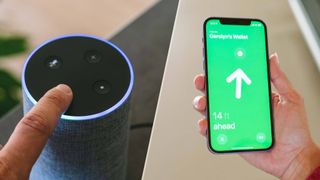
Terminal month, Amazon finally turned on its long-planned Sidewalk dwelling-network augmentation service. The backlash was immediate.
"Sidewalk ... raises more reddish flags than a marching band parade," wrote The Washington Post, a newspaper that happens to be owned past Amazon founder Jeff Bezos.
"Amazon is once more than confirming that its true allegiances do not prevarication with its customers," said the American Ceremonious Liberties Union. "Instead, the visitor is moving to expand its already capacious surveillance infrastructure."
"Unless you opt out, your Amazon devices will automatically beginning participating in this connectivity bacchanalia," said Wired.
"It's only a thing of time earlier someone's network gets hacked and data gets breached," a digital-rights expert told the Los Angeles Times. (Sidewalk does not grant users access to other people's Wi-Fi networks.)
Upon closer examination, however, information technology's not entirely clear whether that alert is justified, particularly when Apple's Discover My network seems to piece of work in much the same way. So is Amazon Sidewalk safe to apply, or do you actually demand to plow it off to protect your privacy and your home network?
- What is Amazon Sidewalk, and how to opt out
- How to gear up upwardly the Amazon Echo
How Sidewalk works
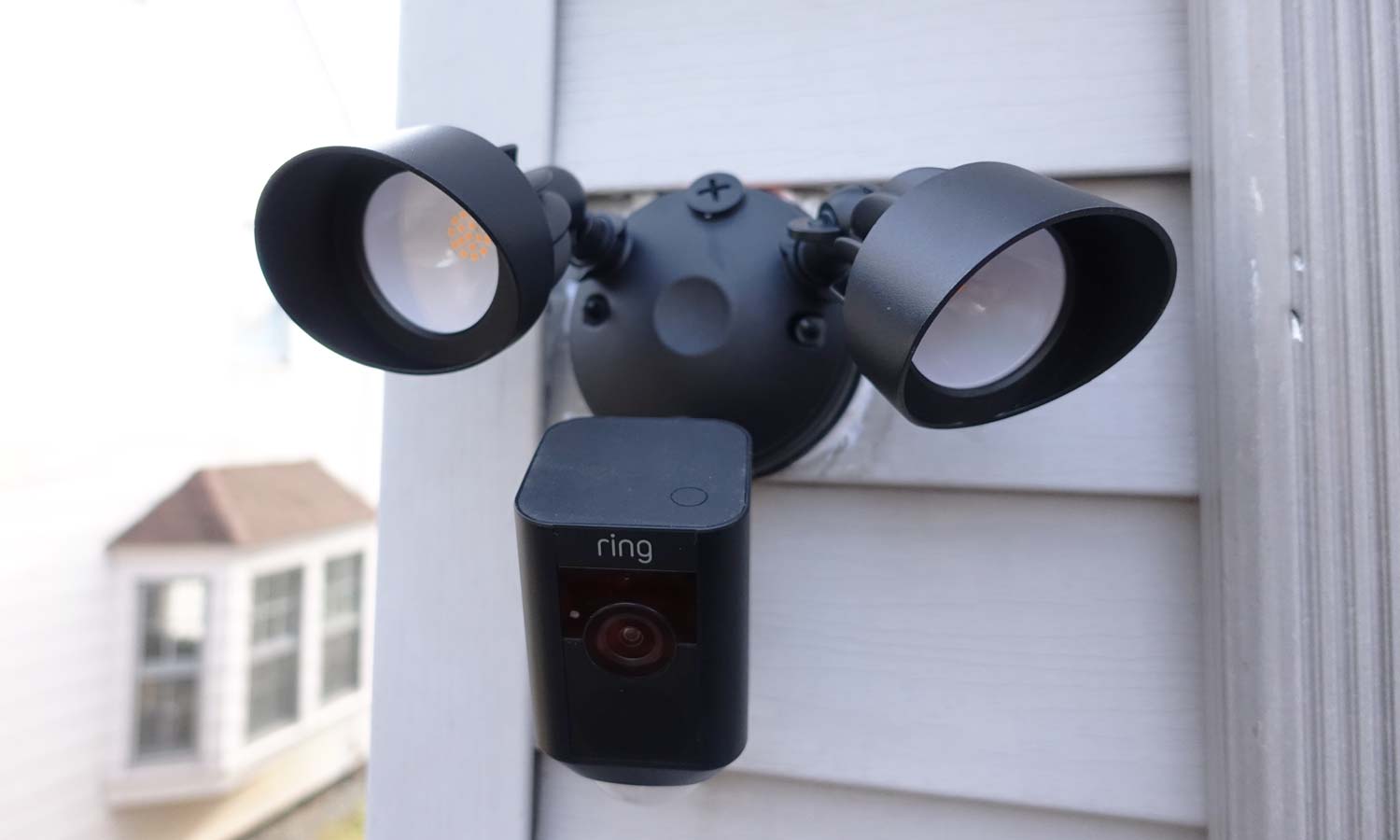
Sidewalk turns virtually Amazon Echo devices and some contempo Band cameras (too made past Amazon) into "bridges" that relay signals from depression-power wireless devices, such as Tile tracking fobs and Level smart locks, to home Wi-Fi routers and the net across.
Here's a list of the Repeat and Ring devices that piece of work equally Sidewalk bridges, including some models that are no longer sold:
- Amazon Echo (3rd Gen)
- Amazon Echo (4th Gen)
- Amazon Echo Dot (3rd Gen)
- Amazon Echo Dot (fourth Gen)
- Amazon Repeat Dot (tertiary Gen) for Kids
- Amazon Echo Dot (4th Gen) for Kids
- Amazon Echo Dot with Clock (third Gen)
- Amazon Echo Dot with Clock (4th Gen)
- Amazon Repeat Plus (1st Gen)
- Amazon Echo Plus (second Gen)
- Amazon Repeat Show (1st Gen)
- Amazon Echo Evidence (2nd Gen)
- Amazon Repeat Show 5
- Amazon Echo Show viii
- Amazon Echo Evidence 10
- Amazon Repeat Spot
- Amazon Repeat Studio
- Amazon Repeat Input
- Amazon Echo Flex
- Ring Floodlight Cam
- Ring Spotlight Cam Wired
- Band Spotlight Cam Mount
The Sidewalk function was remotely activated by Amazon on June eight on Echo and Ring devices that were already in people's homes, although users can opt out. (More on that at the terminate of this story.)
Considering of Sidewalk, you'll now be able to locate a Tile tracking device (and whatever it's attached to) that's out of your telephone's Bluetooth range if there's an Amazon Echo or Ring device within range of the Tile. (Amazon says Sidewalk-compatible tracking devices for pets and adults with dementia are on the way.)
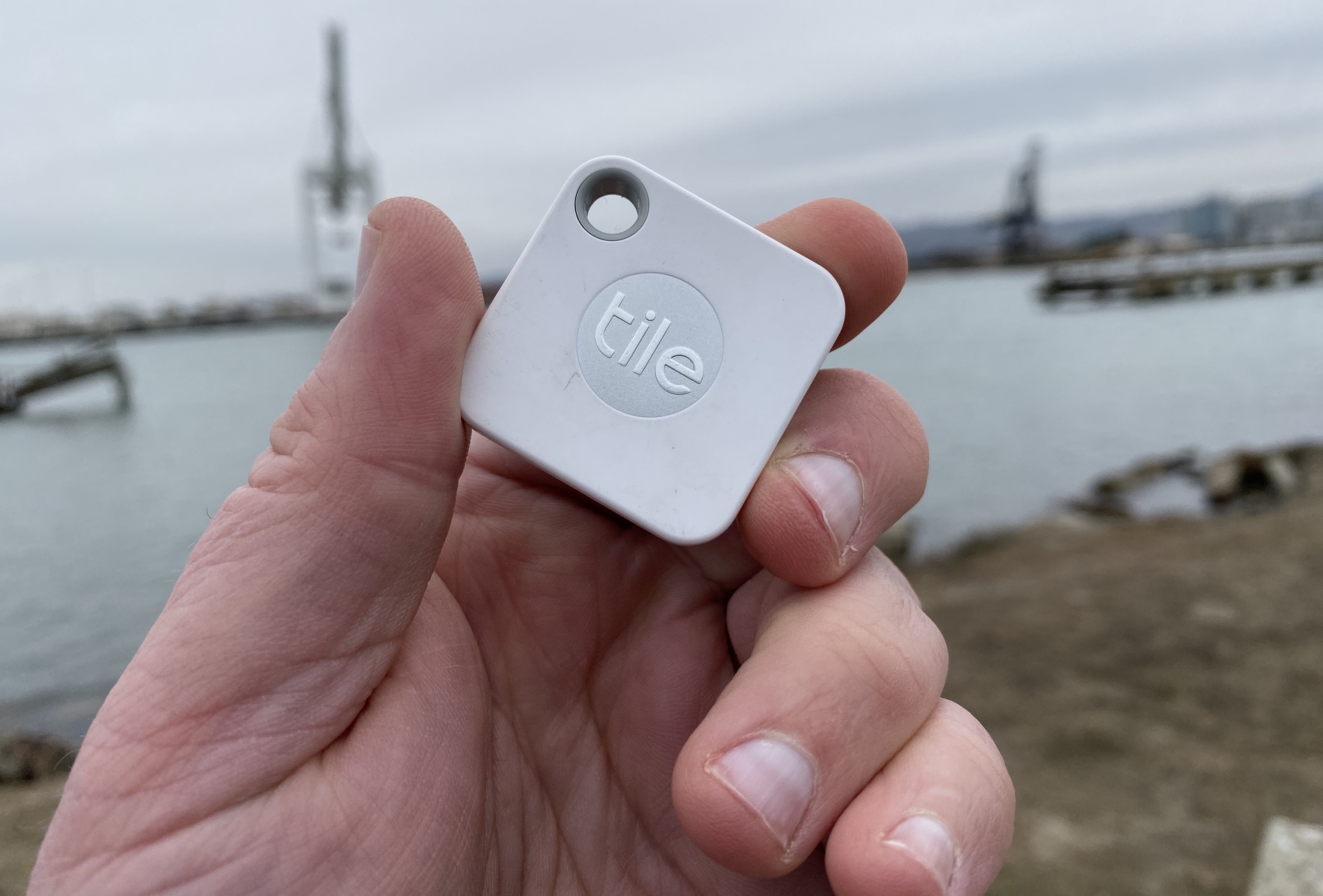
There's a catch, though. Your Tile tracker doesn't communicate with merely your Amazon Echo or Ring devices. Sidewalk lets it communicate with ANY Amazon Echo or newer Ring device within range, whether that device belongs to your neighbour, your cousin or someone halfway around the globe.
This extends the useful range of Tile tracking devices and other Sidewalk-connected devices to the entire planet, theoretically. As well, other people's Tile trackers will be able to communicate with your Repeat or Band and apply up a lilliputian of your net bandwidth to attain the rest of the world.
Sidewalk also serves as a backup network: If you lot lose net connectivity at home, your smart lock will still work remotely as long as information technology tin "hear" your neighbor's Echo. All communications between Sidewalk-enabled devices volition exist encrypted, Amazon says.
Stealing your information?
This network-sharing aspect, and the fact that Amazon switched on Sidewalk without request device owners first, has got people upset.
"Amazon has helped itself to your Wi-Fi bandwidth and is allowing anyone nearby to utilize information technology while they're in the neighborhood," said AskCyberSecurity.com. "This may exist enough for some to opt out [of] Amazon Sidewalk immediately."
"This is uncharted territory for the privacy and security of devices similar Alexa, Repeat and Ring," Connecticut'southward land attorney general said. "Wireless networks are already notoriously vulnerable to hacks and breaches, and families need better data and more time before giving away a portion of their bandwidth to this new organization."
"Sharing your bandwidth with your neighbors is a great idea, said no one always," quipped one Twitter user in response to another who said he had no problem with Sidewalk.
Sharing your bandwidth with your neighbors is a groovy idea, said no one ever 🤭🤭🤭July 4, 2021
None of this is quite accurate. Sidewalk does allow low-energy devices piggyback on your home internet connection via Echo and Band devices, but that's non the aforementioned thing as giving your neighbors full access to your home Wi-Fi network. Those neighbors won't be able to admission your Tile device from their dwelling house network, or vice versa.
Furthermore, the amount of information that is being used by these low-power, low-information devices is minuscule.
"Nosotros're talking well-nigh 100-200 bytes per message," said Jon Callas, a renowned security, privacy and encryption expert who now works with the Electronic Frontier Foundation and recently wrote a detailed examination of Sidewalk. "That's literally rounding errors for bandwidth."
The manual rate betwixt a Sidewalk endpoint device and a Sidewalk bridge is capped at 80 kilobits per second, not much faster than a dial-up modem, and the overall data usage is capped at 500 megabytes per calendar month, which Amazon says is "equivalent to streaming nigh 10 minutes of high-definition video."
Nigh U.S. broadband subscribers accept unlimited data caps, so an extra 500MB of usage over a month won't be noticed. However, for people whose abode broadband usage is capped, half a gigabyte might be pregnant.
That doesn't mean that major American internet service providers (ISPs) are absurd with Amazon Sidewalk, however.
"Amazon does not have the right to do this, full stop," an unnamed representative for an Internet access provider told The Wirecutter for a recent article. "It is not Amazon's network to be sharing — they are putting their customers in violation of their agreements with their providers, and information technology is straight-up theft."
Apple does the same matter with Find My
Yet Amazon Sidewalk isn't the but such service that borrows your bandwidth in club to let low-power smart devices get online. A very similar service has been around since 2010, and few people complain near it.
It's Apple's Observe My network, which started out as a way to locate lost phones and has since grown into a manner to find almost anything, including AirPods, Apple Watches and fifty-fifty high-cease bicycles.
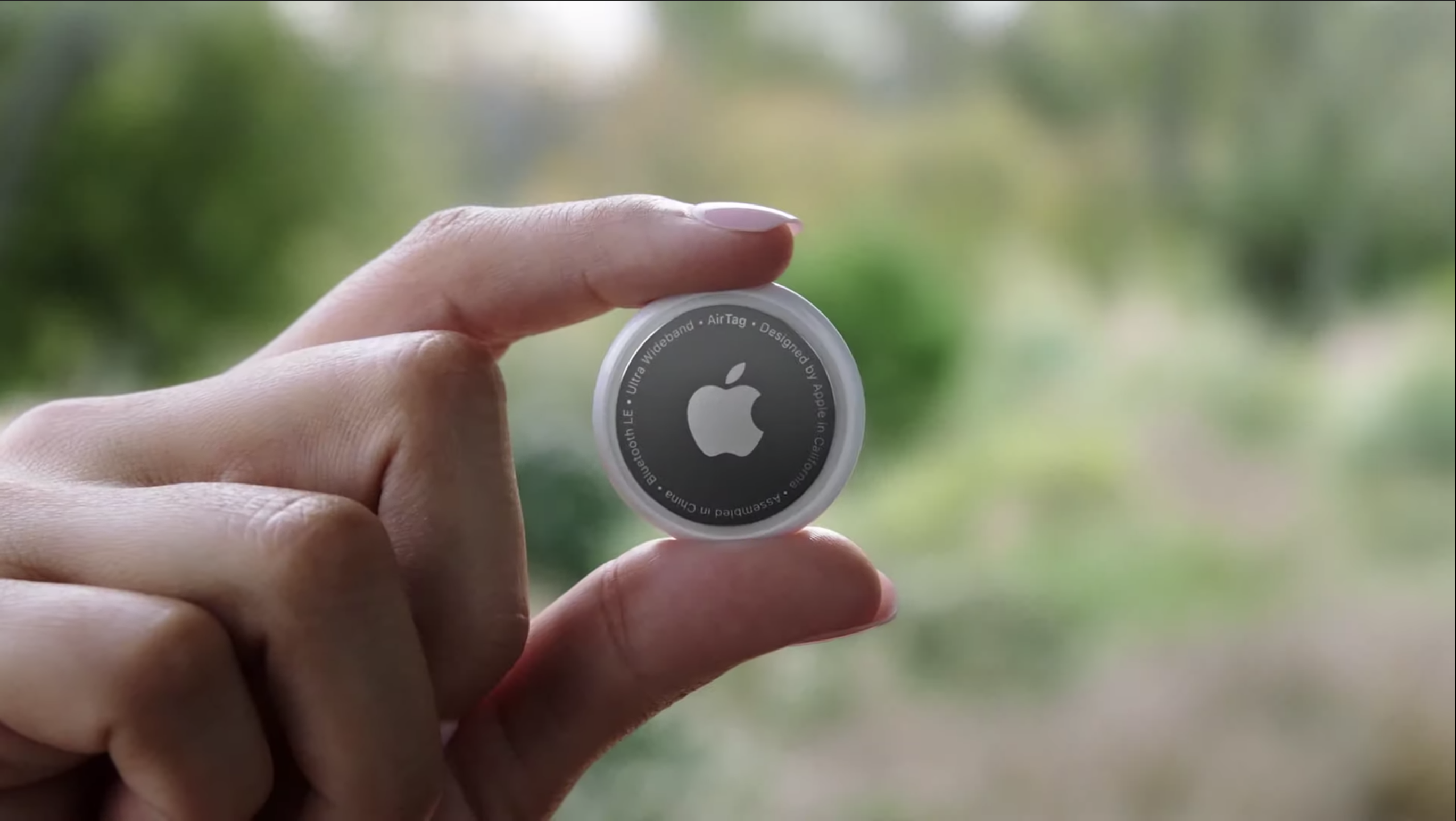
Apple tree'south new AirTags use Observe My to piece of work in much the aforementioned way every bit Tile trackers do on Amazon Sidewalk. A lost AirTag will communicate via Bluetooth with whatsoever iPhone, iPad or Mac that happens to be within range.
Discover My so will apply a pocket-size chunk of that Apple tree device's cellular or Wi-Fi data to reach out to Apple's servers, which so tell the AirTag's owner where information technology is.
The Discover My network appears to exist turned on by default on Apple devices, merely as Sidewalk is on by default on Ring and Repeat devices, and the estimated two billion Apple devices worldwide make Find My a truly global network.
Turning on information-sharing services by default can be a trouble, as Luta Security founder Katie Moussouris pointed out.
"Vendors like Apple and Amazon should never enable new features that share whatsoever data or device admission like Wi-Fi without getting user informed consent first," Moussouris told Tom'south Guide. "Personally, I disable features that are designed to share data, fifty-fifty if it means less convenience."
Nonetheless, there's been much less of a privacy outcry near Notice My. No one is recommending that you turn off Find My to protect your privacy, or that Apple tree should be paying you to use your cellular data.
Soon subsequently AirTags were released this past April, information technology was constitute that despite Apple'south efforts to the contrary, you lot could indeed use AirTags to stalk or track people without their noesis. But Apple quelled the bad publicity past fixing that trouble with an over-the-air update. (Tile is doing the same.)
A matter of perception
So is there a double standard? Why does Apple get a laissez passer for Find My when Amazon is raked over the dress-down of public opinion for doing the same affair with Sidewalk?
"Apple seems to take washed more to earn the trust of journalists and data protection experts," said Melanie Ensign, founder and CEO of Discernible, Inc. and an advisory board member at The Rise of Privacy Tech, a digital-privacy advocacy grouping. "The archway of Amazon into this space is seen equally more than of a privacy business because of the visitor's long history of privacy violations."
Ensign cited several recent examples of Amazon falling brusque on user privacy and having tight connections to government authorities.
An Echo device sent a recording of a married couple'south private conversation to a friend; Ring used agile-duty police officers to promote the visitor's devices; Amazon Spider web Services was used by Clearing and Community Enforcement to collect data on illegal immigrants; and Amazon may have to pay the Eu $425 million in fines for every bit-yet-unspecified violations of the General Data Protection Regulation.

"Information technology's unsurprising that customers and privacy advocates questioned Amazon's privacy and security commitments when information technology rolled out Sidewalk," said Lourdes Turrecha, founder of The Rise of Privacy Tech. "Tin customers trust that Amazon volition not overcollect, misuse, or overshare customer information?"
Meanwhile, Apple has made privacy i of its chief selling points. That's not simply marketing: Apple has acted on those principles, engaging in a very public court boxing with the U.South. government over decrypting an iPhone belonging to a terror suspect.
"Apple has congenital trust with its customers when it comes to their data," said Turrecha. "This commitment to privacy comes from the acme: Apple CEO Tim Cook."
Technically, both Sidewalk and Find My are pretty prophylactic
In terms of security and encryption, both Apple Observe My and Amazon Sidewalk seem to be safe to apply. Amazon has released a white paper detailing how Sidewalk works, and Apple tree has also released details about how the Detect My network functions. Experts say in that location's not much to worry nearly from a technical point of view.
"They sure do wait remarkably similar to me," Chet Wisniewski, chief enquiry scientist at Sophos, told Tom'due south Guide.
"They are both well designed and both companies have a expert track tape securing their mobile/IoT devices," he added. "Clearly there is a chasm between the privacy positions of Apple tree and Amazon, and that seems far more than probable to consequence in this deviation of public opinion."
Wisniewski pointed out, however, that the expansion potential of the two networks is quite different. Apple tree's Find My network is "practically a location beacon relay" that tin send data only very slowly, limiting its prospects for hereafter uses beyond locating devices.
Meanwhile, Sidewalk, which uses stationary rather than mobile devices equally relays, is "designed to exist a pseudo-permanent connection and to be used for a larger array of low-bandwidth communications," Wisniewski said.
That'south partly because some Sidewalk-enabled relays, such every bit newer Repeat devices, take congenital-in 900MHz radios that can carry a decent corporeality of data — between 1 and 2 megabits per second, a bit faster than a DSL connexion — for longer distances and through more walls and copse than Bluetooth can. Until Sidewalk was activated, those 900MHz radios lay dormant.
"You lot won't be streaming your doorbell footage over Sidewalk," said Wisniewski, "only it isn't limited to things like location beacons and alerts the aforementioned as [Find My]."
Of course, that brings us dorsum to the result of your neighbors "stealing" your bandwidth. For the moment, that's not much of a business organisation because Sidewalk'due south usage of Wi-Fi networks is capped to low speeds and small amounts of information, as detailed earlier.
That might modify every bit the 900MHz network builds out, but for now, information technology'southward Apple users who should be more upset about broadband borrowing, Wisniewski said.
"Apple'southward bandwidth usage, while tiny, is more likely to use mobile bandwidth, which is often costly and metered," he said. "Amazon Sidewalk is more than likely to utilise broadband connections where there is no data cap, or one large enough that a few kilobytes a day is an uninteresting data point."
A public-relations problem
The Electronic Frontier Foundation's Jon Callas thinks that the bad publicity surrounding Sidewalk is a self-inflicted wound by Amazon.
"Amazon botched the annunciation — that's the center that everything else revolves around," Callas said.
Amazon declared in May that all Echo devices, including those that had been sitting in customers' homes for years, would have Sidewalk switched on by default in a matter of weeks. Then Amazon let the media convey that message to the public, forth with a lot of misleading data, instead of doing it itself.
"Amazon never said, 'Nosotros take a 900 MHz radio in these devices that nosotros programme to use, and here's how we're gonna apply information technology'," Callas said. "Amazon'due south 900MHz is actually a bright affair for home automation, [but] the manner that we got told most it was, 'You have 10 days earlier Amazon starts sharing your dwelling house internet.'"
By contrast, Callas observed, Apple tree has slowly congenital upward Find My so that customers learn to trust information technology in stages as Apple incrementally adds more features.
"First at that place was Find My iPhone, then Discover My iPad, then Find My Friends," Callas said. "We accept had over a decade to get used to information technology and understand what was going on."
Even the backfire against Apple's AirTags was an opportunity that Amazon missed, Callas pointed out. Amazon'southward partner Tile certainly took notice.
"When [Apple] came out with AirTags, they built in some anti-stalking measures and fixed the bug," he observed. "Amazon has been mostly silent. Tile came out and said there were problems, and said they would work on it."
If Amazon had introduced Sidewalk to the public the fashion Apple tree unveils its own new features and services, Callas said, nosotros might non be debating Sidewalk'due south privacy and security.
"Everyone has a corner of their house where Wi-Fi doesn't piece of work," he pointed out. "If Amazon had come out and said, 'Hither's the solution,' we all would have gone, 'Wow, that's brilliant,' and at that place would be articles about how Amazon had taken away the lead in home automation from Google and Apple."
A long-continuing issue of mistrust
Still, Amazon's trust problems seem to become deeper than simply bad production rollouts. The close partnerships between Ring and local police departments has fabricated civil libertarians suspicious of Amazon, and a wave of "hacks" of Ring devices (many of which were due to reused or weak passwords) got plenty of publicity a couple of years ago.
"As Apple has demonstrated, trust is congenital through consequent behavior over a long catamenia of fourth dimension," Ensign said. "The backfire nosotros're seeing against Amazon indicates that in the eyes of the public, the company has not done plenty to earn the trust they're asking for."
"Amazon cannot hope to win public trust with the blueprint of a single product," she added. "They will have to repeat this kind of development over and over and over."
How to plow off Sidewalk or Notice My
If you're still worried about Sidewalk, it's non that hard to opt out of using it. Bank check out our more in-depth explanation of how to turn off Sidewalk, simply the basic steps are these. Unfortunately, you'll have to do this separately for Alexa and for Band.
For Alexa:
- Open the Alexa app on your mobile device.
- Tap the More push button.
- Tap Settings.
- Tap Account Settings.
- Tap Amazon Sidewalk.
- Tap the toggle switch to turn Sidewalk on or off.
For Ring:
- Open up the Ring app on your mobile device.
- Tap the three-line "hamburger" icon in the meridian corner.
- Tap Command Centre.
- Tap Sidewalk.
- Tap the toggle switch to plough Sidewalk on or off.
- Confirm that y'all practise indeed want to turn off Sidewalk.
There'south less concern most Apple's Detect My network, but turning information technology off on an iPhone is simple.
For Notice My network:
- Open Settings.
- Click on your name.
- Click on Find My.
- Toggle off Notice My network.
Observe that y'all tin can leave Find My turned on for your iPhone while switching off the Notice My network. (Hither's how to turn off Observe My altogether.)
Yous'll yet be able to locate your iPhone as long equally it's powered on, but switching off the Find My network will no longer get in possible for your iPhone to exist found if it's turned off or out of bombardment power.

Source: https://www.tomsguide.com/news/amazon-sidewalk-vs-apple-find-my
Posted by: suttonsarry1995.blogspot.com
0 Response to "Special Report: Can you trust Amazon Sidewalk and Apple's Find My?"
Post a Comment